
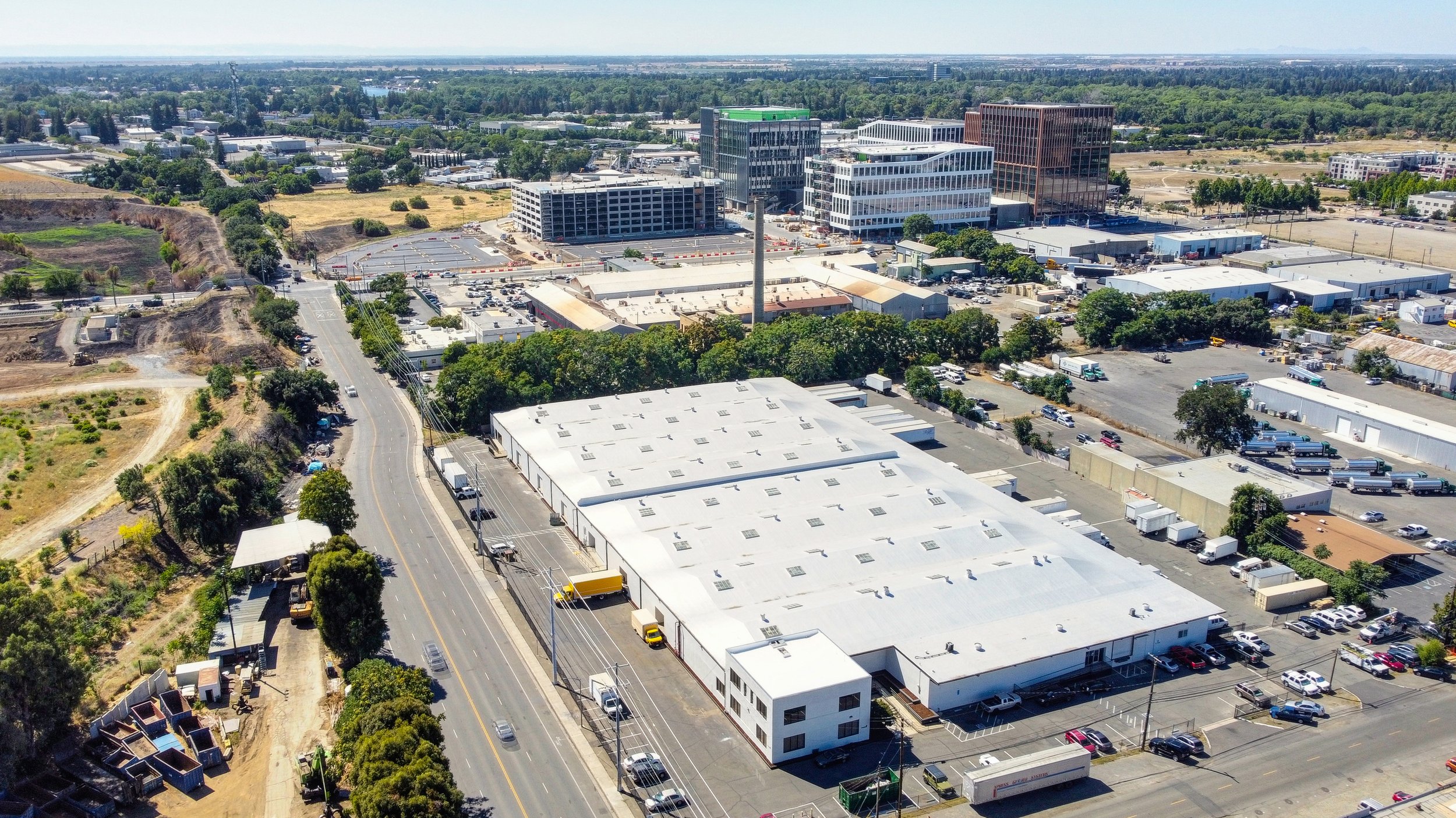
Why We Invest in Multi-Tenant Industrial & Workforce Housing
Through our 18-year history as a firm, we’ve had the opportunity to invest and create value across all four of the main real estate asset classes: retail, office, multifamily, and industrial. We have been able to weigh the relative merits and risk-adjusted return potential of each – as well as sub-assets within the four. Through this experience, we have developed unique conviction around Multi-Tenant Industrial and Workforce Housing, sub-assets within industrial and multifamily, respectively.

What is Workforce Housing?
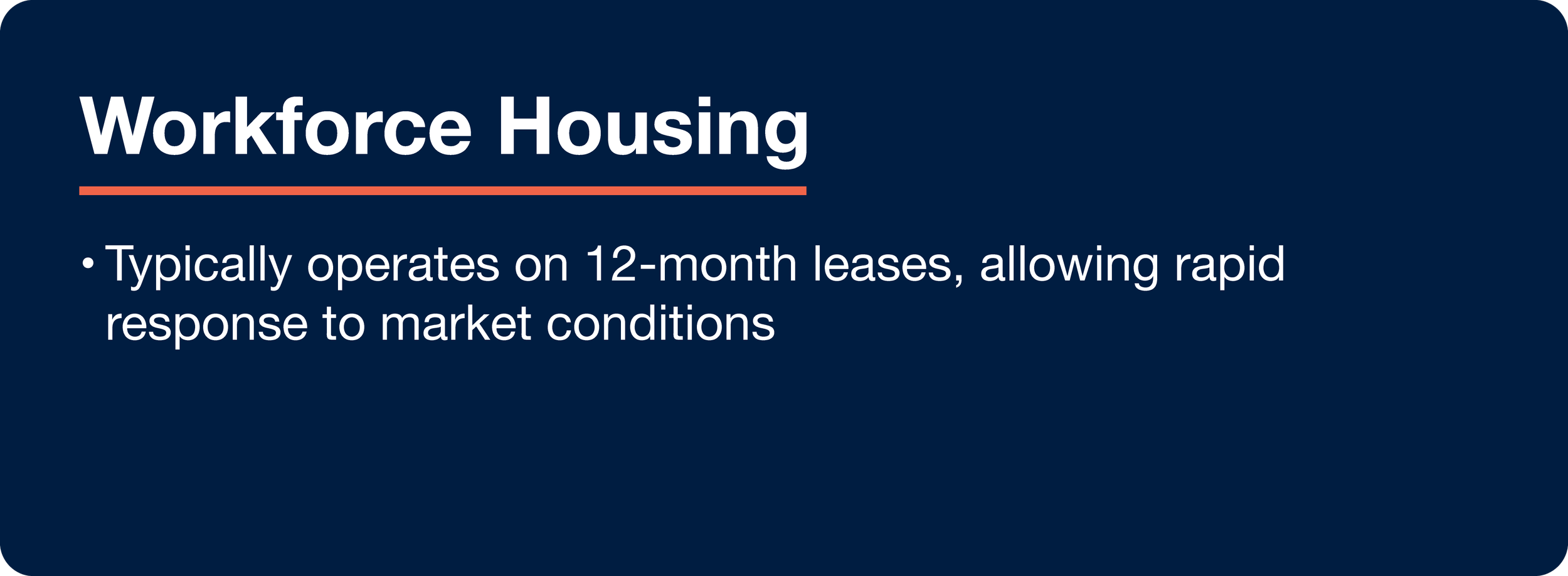
Market-rate apartments that are naturally affordable to the middle-income workforce. Typically 1980s-2000s construction Class B and C multifamily assets (often Class A when constructed) in stable, affordable markets with strong employment fundamentals. These assets feature central location, garden-style feel, and amenities that are typical for market-rate apartments and are valued for their low volatility and needs-based demand.
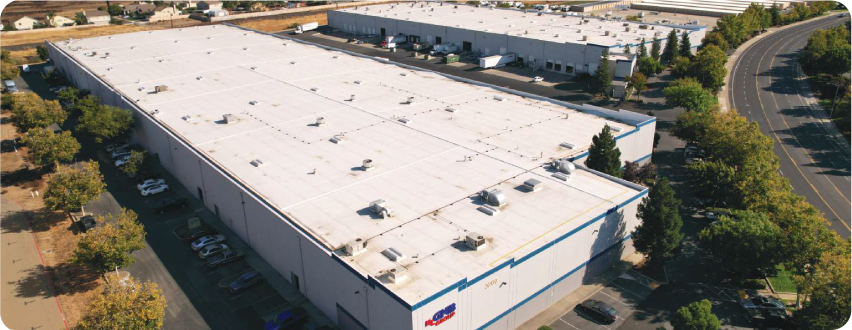
What is Multi-Tenant Industrial?
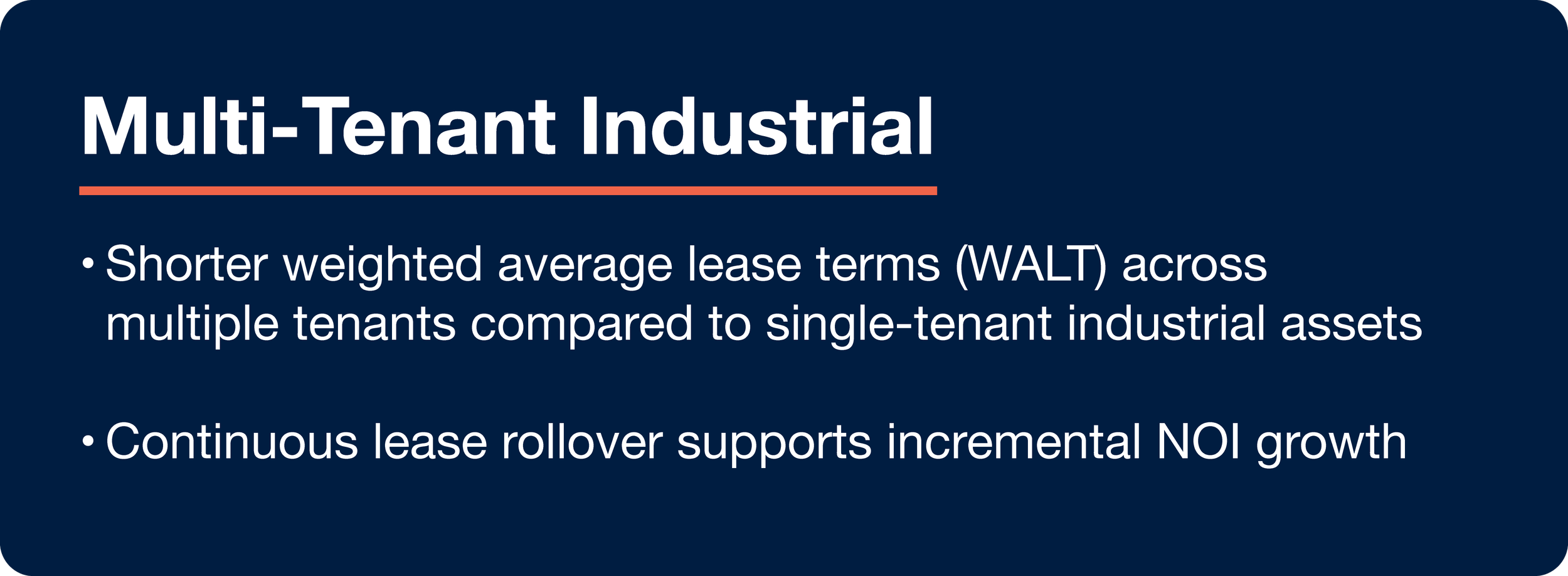
Industrial properties designed to accommodate multiple small to mid-sized tenants within a single building or business park, typically serving local and regional businesses with light manufacturing, warehouse, distribution, or service-oriented uses. These assets feature flexible suite sizes, individual entrances, and functional loading, and are valued for their durable demand and operational flexibility.

Built for Recession Resistance
Needs-based demand and diversified tenants support stable occupancy and consistent cash flow through economic cycles.

Operationally Efficient with Lower Capital Needs
Lower capital expenditures and minimal tenant improvements enhance cash flow predictability and long-term return stability.

Diversified Income Stream, Lower Risk
Income distributed across many tenants reduces volatility and limits exposure to any single tenant or vacancy.

Inflation Protection and NOI Growth
Short lease durations and frequent rent resets enable consistent income growth and built-in inflation protection.

Constrained Supply Supports Rent Growth
Limited new supply and high replacement costs create a durable supply-demand imbalance that supports long-term rent growth.


Built for Recession Resistance
Both Workforce Housing and Multi-Tenant Industrial are supported by needs-based demand and diversified tenant structures, enabling them to maintain occupancy and income stability during economic downturns.
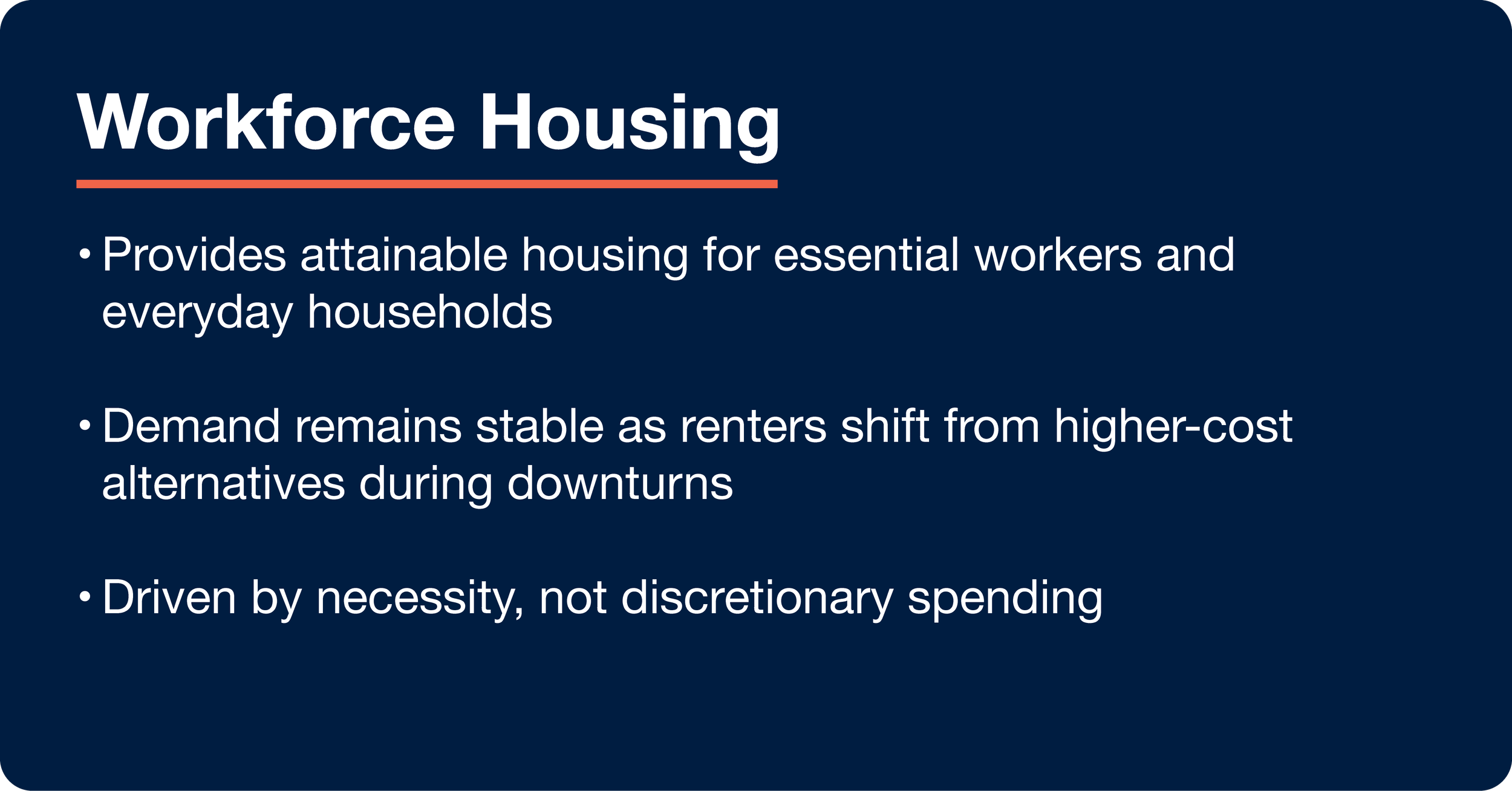
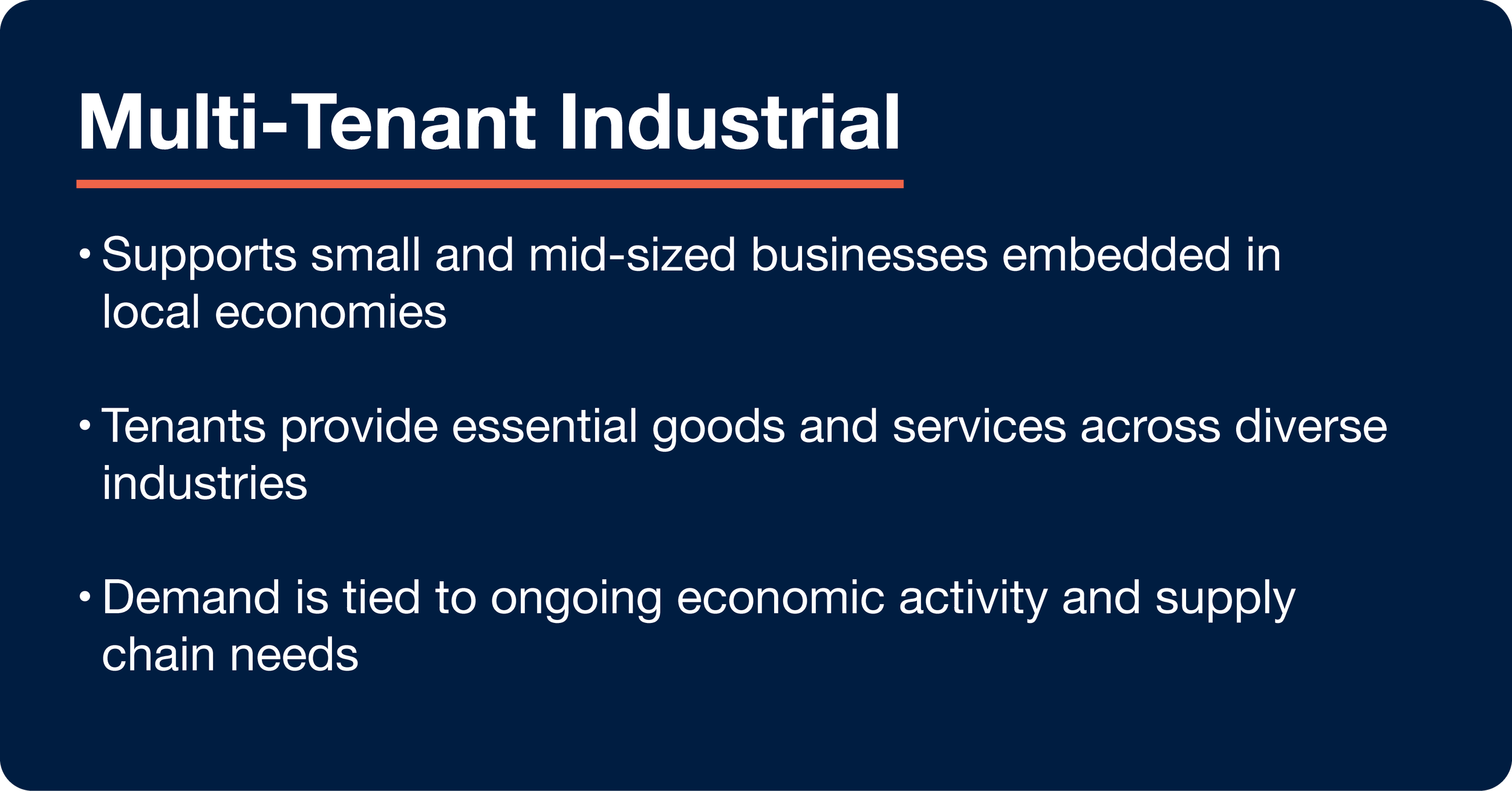
This needs-based demand profile supports more stable occupancy and consistent cash flow across market cycles.
Diversified Income Stream, Lower Risk
Our investments are structured around highly diversified tenant bases, reducing reliance on any single income source.
Income is distributed across numerous tenants or residents
No exposure to single-tenant vacancy risk
Smaller lease sizes create a more stable and predictable rent roll
Portfolio performance is less impacted by individual tenant disruptions
This fragmentation creates more resilient cash flow compared to concentrated or single- tenant assets.
Constrained Supply Supports Rent Growth
Both sectors face structural barriers to new development, limiting future supply and supporting long-term rent growth.
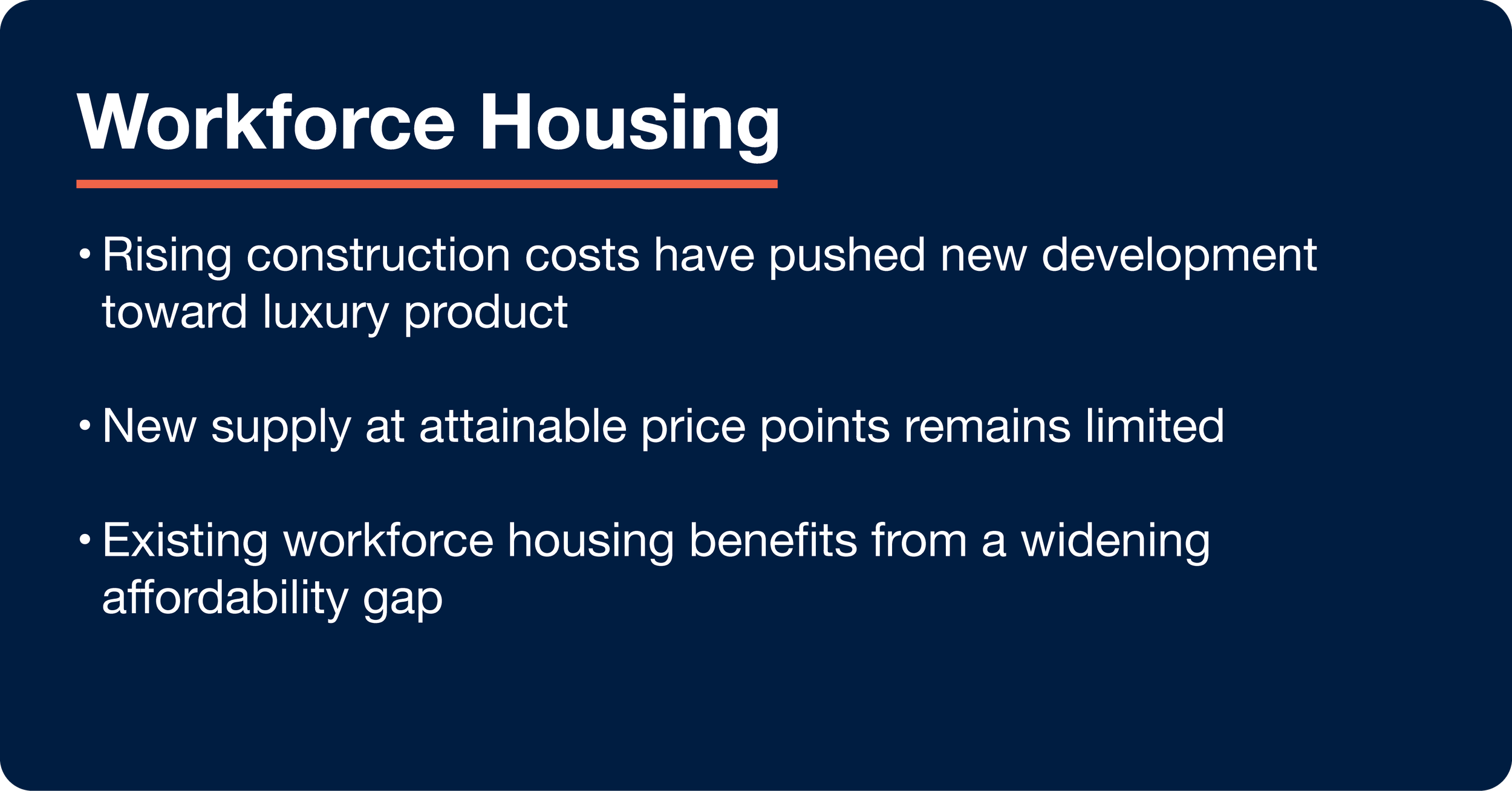
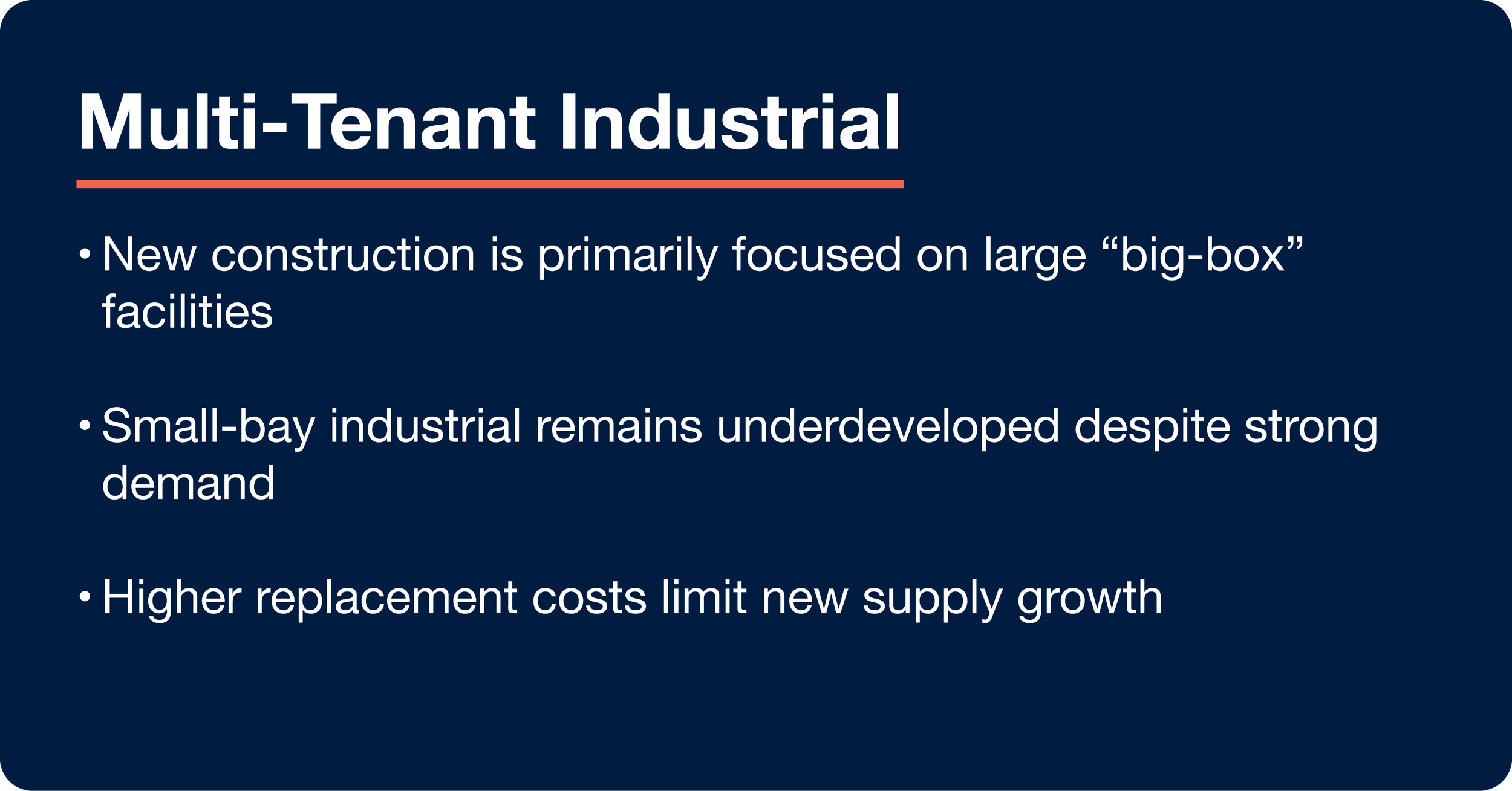
The result is a sustained imbalance between supply and demand, reinforcing pricing power.
Operationally Efficient with Lower Capital Needs
These asset types benefit from relatively low capital expenditures and tenant improvement costs, supporting stronger and more predictable cash flow.
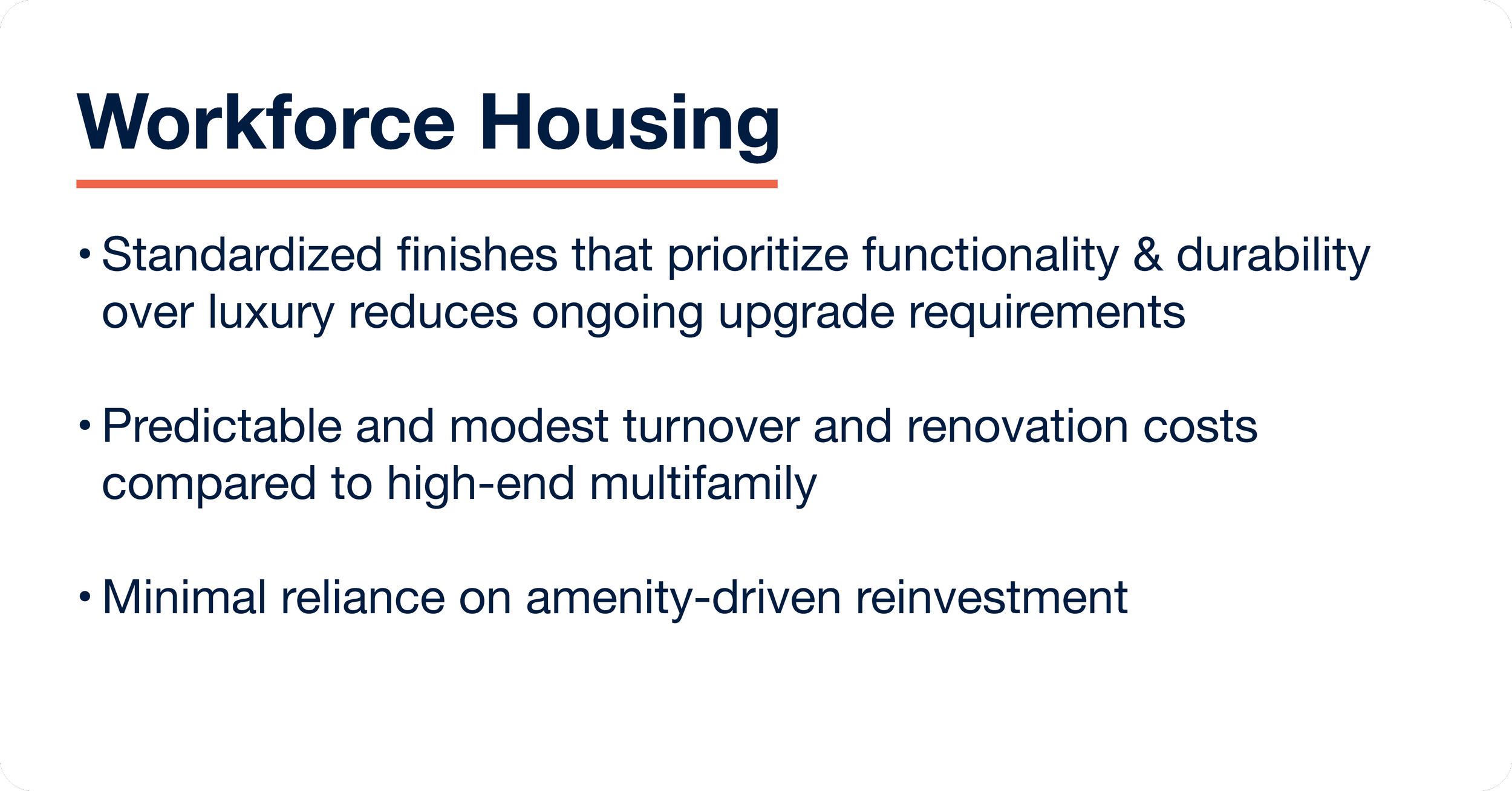
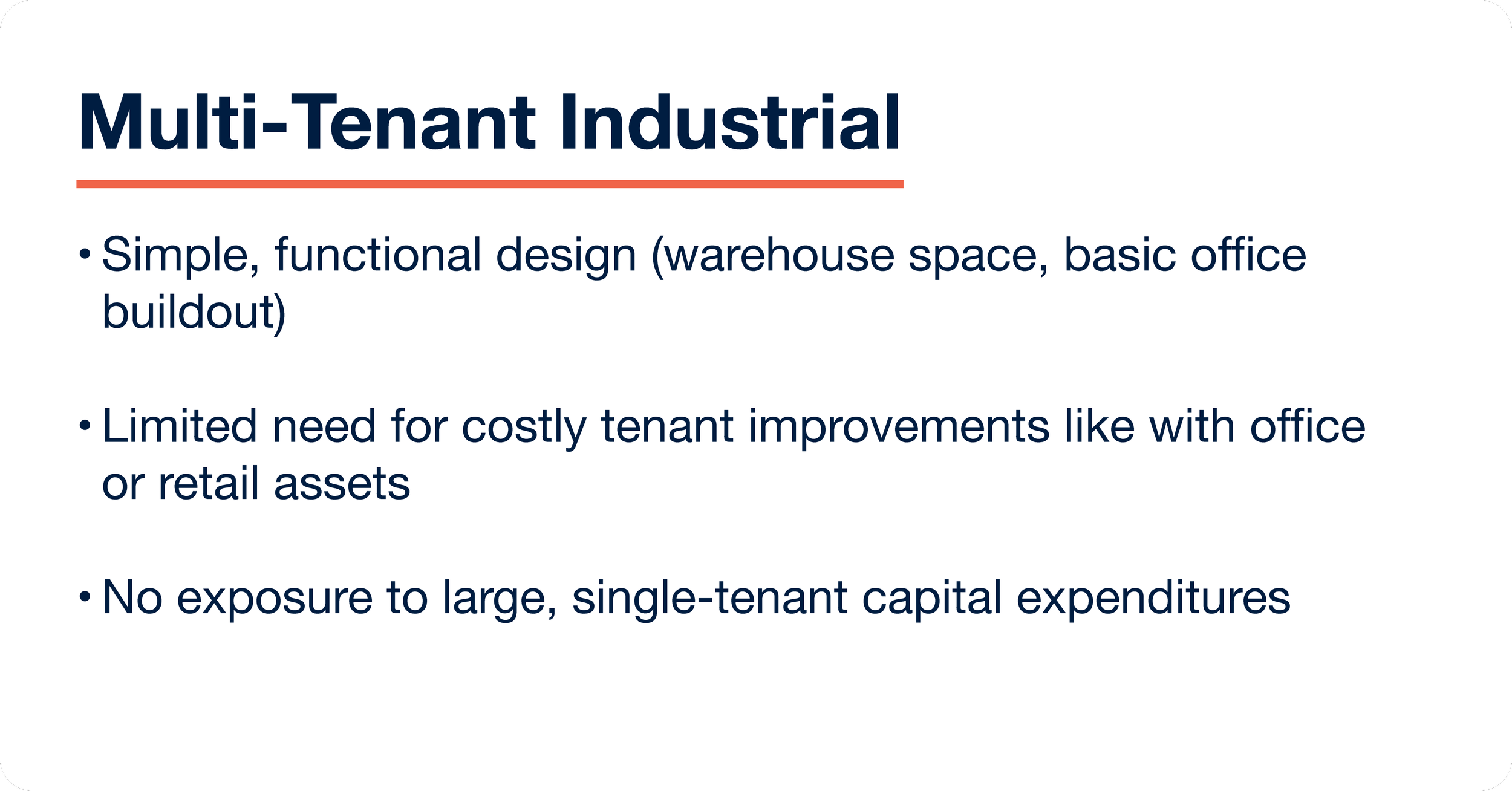
This efficiency enhances cash flow durability, predictability, and long-term return stability.
Inflation Protection & NOI Growth
Both asset classes are structurally positioned to capture rent growth and respond to inflationary environments.
Shorter lease durations enable frequent rent adjustments
Regular lease rollover creates consistent mark-to-market opportunities
Income growth is driven by a steady cadence of renewals
This structure provides built-in inflation protection and faster NOI Growth. This strengthens downside risk protection by increasing cash flow and valuation more quickly, creating a larger financial cushion to absorb market volatility.